
By Low Handicap Golf | Updated May 2026
Walk into any golf shop and the ball wall will overwhelm you. Dozens of models, a dizzying range of prices, and marketing copy promising distance, spin, feel, and control all in the same dimpled sphere. Pick one at random and there’s a reasonable chance you’re either overpaying for performance you can’t use, or playing a ball that actively limits the parts of your game you’ve been working to improve.
The golf ball is the one piece of equipment that every shot has in common. Driver, iron, wedge, putter — the ball is in play on every single stroke. Getting it right has a real, measurable impact on performance. Getting it wrong is one of the most common — and most fixable — scoring mistakes that recreational golfers make.
The good news is that choosing the right golf ball doesn’t require a science degree. It requires understanding four variables: compression, spin, cover material, and how those specs align with your game. Once you understand those, the choice becomes straightforward. This guide breaks down each variable, matches ball types to skill levels, and recommends five specific models that cover every type of golfer.
Section 1: Compression — Match the Ball to Your Swing Speed
Compression is the most important spec most golfers ignore. It measures how much the ball deforms at impact — a high-compression ball requires more force to compress fully, while a low-compression ball compresses easily on slower swings. When a ball doesn’t compress properly for your swing speed, you lose distance, feel, and efficiency simultaneously.
The general framework is simple:
- Under 85 mph driver swing speed: Low compression (under 70) — balls like the Callaway Supersoft or Srixon Soft Feel
- 85–100 mph: Mid compression (70–85) — the sweet spot for most recreational golfers
- 100+ mph: High compression (85–100+) — tour-level balls like the Pro V1x or TP5x
Most amateur golfers fall in the 80–95 mph range, which means a mid-compression ball is the right starting point. The mistake golfers make is reaching for a high-compression tour ball because it’s “the best” — if your swing speed doesn’t compress it fully, you’ll lose distance and the ball will feel boardy off the putter face. Higher compression doesn’t mean better performance; it means better performance for the right swing speed.
Section 2: Spin — The Driver vs. Short Game Trade-Off
Here’s the central tension in golf ball design that manufacturers spend billions of dollars trying to resolve: you want low spin off the driver (to reduce sidespin and keep the ball in play), and high spin on wedges and short game shots (to create stopping power on approach shots and greenside control).
A cheap two-piece distance ball achieves low spin everywhere — that’s great for tee shots and disastrous around the greens, where the ball skips through without checking. A premium tour ball achieves high spin everywhere — excellent for greenside control, but potentially punishing off the tee if your driver already generates too much sidespin and is causing slices or hooks.
The best golf balls for serious players use multi-layer construction (three, four, or five layers) to create what’s called spin separation — lower spin off the driver and higher spin on wedge shots. This is the core performance advantage of a premium ball over a budget ball, and it’s why the upgrade from a two-piece ionomer ball to a three-piece urethane ball is one of the most impactful equipment changes a developing player can make.
Section 3: Cover Material — Why Urethane Matters
Golf ball covers come in two primary materials: ionomer (commonly called Surlyn) and urethane.
Ionomer covers are durable, consistent, and inexpensive to manufacture. They produce lower spin on all shots — both the good (less sidespin off the tee) and the bad (less stopping power around the greens). Budget balls, distance balls, and most “value” models use ionomer. They’re the right choice for golfers who lose several balls per round and for beginners still developing swing consistency.
Urethane covers are softer, generate significantly more greenside spin, and produce the refined feel at impact that distinguishes premium balls. Every tour-level ball uses a cast urethane cover. The softness creates more contact between grooves and cover material through impact, generating the spin that stops chips and approaches. Urethane is also more expensive to produce and slightly less durable — a premium urethane ball showing a cut or scrape should be retired.
For golfers who have developed an established short game and are working on scoring, the switch to a urethane-covered ball is not optional. It’s the equipment change that makes greenside spin controllable rather than accidental.
Section 4: Matching Ball Type to Skill Level
Understanding the specs is useful. Understanding how they apply to your actual game is more useful.
High handicappers (18+): Prioritize durability and distance. A two-piece ionomer ball removes variables from an already inconsistent game and doesn’t penalize the sidespin that comes with developing swing mechanics. The lower price point means you can replace lost balls without financial anxiety — which matters more than greenside spin at this stage.
Mid handicappers (10–18): The right level for the critical upgrade to a urethane-covered, mid-compression ball. Your short game is developing enough to actually use greenside spin. Your driver is consistent enough that a slightly higher-spinning ball won’t catastrophically punish every off-center hit. This is where the jump from a value ball to a three-piece premium ball produces the most immediate, noticeable improvement in scoring.
Low handicappers (under 10): Tour-level balls. You have the ball-striking consistency to use spin separation, the short game to use urethane coverage, and the swing speed to compress a higher-compression model properly. The choice between tour models at this level comes down to personal preference for feel and flight characteristics.
Slow swing speeds (all handicaps): Regardless of skill level, a low-compression ball maximizes energy transfer and distance. A senior golfer playing a 100-compression tour ball is losing yards they could have kept simply by matching compression to swing speed.
5 Ball Recommendations by Player Type
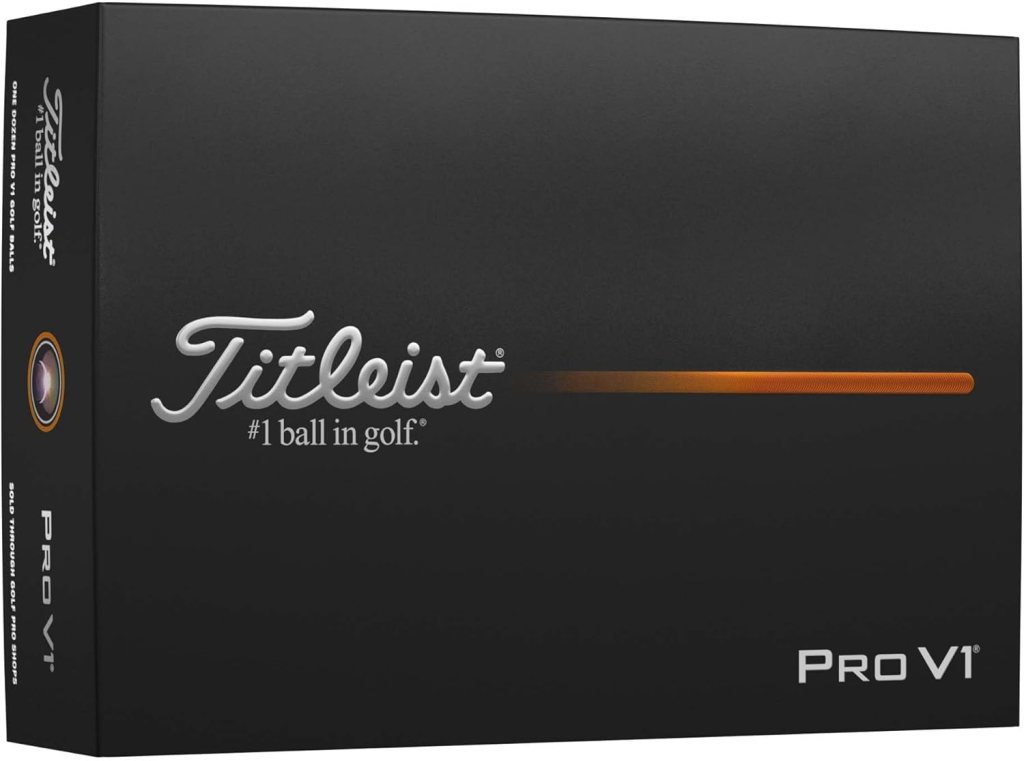
1. Titleist Pro V1 — Best for Low Handicappers and Consistent Strikers
Price: ~$57/dozen | Compression: ~87
The Pro V1 is the most-played ball on tour for a reason that doesn’t require much elaboration. The Titleist Pro V1 offers what many testers consider the gold standard for feel in 2026 — a soft response off the putter and responsive feedback on iron shots that explains its dominance. The 2026 version features a reformulated core and updated cast urethane cover that produces exceptional spin separation: low spin off the driver, high spin on wedges, and a straight, penetrating ball flight that holds its line in the wind. At compression 87, it suits swing speeds from around 90 mph upward. If your handicap is below 10 and you’re not playing a Pro V1 or direct equivalent, you’re likely leaving short game performance on the table.
Best for: Low-to-mid handicappers with swing speeds of 90+ mph who want the benchmark in tour-level feel and greenside control.
2. Callaway Chrome Tour — Best All-Around Premium Ball
Price: ~$55/dozen | Compression: ~75
The 2026 Chrome Tour is an outstanding premium option for golfers seeking a complete package of exceptional speed, soft feel, consistent flight, and reliable short-game control. The Tri-Force construction — the same engineering philosophy that powers Callaway’s Quantum driver face — creates consistent ball speeds across the face, while the thin urethane cover delivers greenside spin that competes with the Pro V1. At compression 75, it’s slightly softer than the Pro V1 and suits a wider range of swing speeds — making it the more accessible premium option for mid-handicappers who want tour-level performance without the Pro V1’s compression demands.
Best for: Mid-to-low handicappers across a range of swing speeds who want premium feel and performance at a slightly lower compression than tour-standard offerings.
3. TaylorMade Tour Response — Best for Mid-Handicappers Making the Upgrade
Price: ~$45/dozen | Compression: ~70
The Tour Response is the gateway ball — the model that proves a urethane cover doesn’t have to cost $55 a dozen. The Tour Response generates impressive ball speeds while maintaining a confidence-inspiring soft feel from inside 150 yards. The lower compression hits the sweet spot for mid-handicappers with moderate swing speeds around 90–95 mph, optimizing both distance and control. The softer cast urethane cover delivers authentic short game spin that helps mid-handicappers attack flags with confidence.
At $45 a dozen with a cast urethane cover, the Tour Response fills a specific and important gap in the market: it gives golfers who are ready to upgrade from a distance ball their first experience of real greenside spin without the sticker shock of full tour-ball pricing.
Best for: Mid-handicappers (12–18) making the move from a two-piece distance ball to a urethane-covered option for the first time.
4. Titleist AVX — Best for Mid-Handicappers Who Want Low Spin and Soft Feel
Price: ~$50/dozen | Compression: ~75
The AVX is Titleist’s answer for golfers who want premium feel and greenside performance but need lower long-game spin than the Pro V1 delivers. The Titleist AVX quickly became a favourite during testing, offering everything you’d expect from a premium golf ball. Ideal for mid-handicap players, the AVX delivers low spin in the long game while still providing high spin and the softest feel of any of Titleist’s high-end balls, thanks to its 3-piece construction and thicker urethane cover. If you’re a mid-handicapper who already generates decent clubhead speed but fights ballooning drives or too much sidespin, the AVX’s low driver spin helps without giving up the short game performance you’ve been building toward. Reformulated for 2026, it sits at compression 75 — accessible for a wide mid-handicap range.
Best for: Mid-handicappers with moderate to higher swing speeds who need lower long-game spin to improve driver consistency while keeping urethane-quality short game performance.
5. Srixon Soft Feel — Best Value Ball for High Handicappers and Budget Players
Price: ~$22/dozen | Compression: ~60
Every golfer — regardless of how seriously they take the game — should have a consistent ball in play. The Srixon Soft Feel is the best argument for playing the same ball every round without spending $50 a dozen to do it. At 60 compression and $22 a dozen, it delivers a genuinely soft feel, reliable distance for its price category, and enough consistency to build a real feel for how a ball responds off the club. For golfers who lose multiple balls per round, the financial anxiety of playing a premium ball actively hurts decision-making on the course. The Soft Feel removes that anxiety completely and lets you focus on the shot.
Best for: High handicappers, budget-conscious golfers, and anyone who wants to commit to a consistent ball without the premium price — the gateway to developing a real feel for how golf balls respond.
Buying Guide Summary: The Decision Framework
Use this simple framework to choose your ball:
Step 1 — Measure your swing speed. Most golf shops and launch monitors give this in seconds. Under 85 mph: low compression. 85–100 mph: mid compression. Over 100 mph: high compression.
Step 2 — Assess your skill level honestly. If you lose more than three balls per round, buy a durable ionomer ball you can afford to replace. If your short game is developing and you want to use greenside spin, upgrade to a urethane cover.
Step 3 — Pick one ball and stick with it. Consistency of ball choice builds calibration that translates directly to feel and distance control. Rotating between three different models every few rounds makes it impossible to develop that calibration. Pick a ball, play a full season, and your feel for distances and short game shots will improve measurably.
Step 4 — Don’t overspend for your level. A $57 Pro V1 is not better than a $45 Tour Response for a 15-handicapper — the Tour Response’s compression and spin characteristics are better matched to that swing type. The best ball for your game is the one whose specs align with your actual swing speed and skill level.
Final Verdict
Golf ball fitting is the most undervalued equipment decision most golfers make. The ball is the only piece of equipment on every single shot — and playing the wrong one has measurable consequences for distance, feel, and greenside control.
For serious golfers working toward single digits: the Titleist Pro V1 or Callaway Chrome Tour deliver the tour-level performance your game has earned. For mid-handicappers ready to upgrade: the TaylorMade Tour Response is the best entry into real urethane performance at a price that doesn’t sting. For players who need low spin alongside premium feel: the Titleist AVX solves a specific problem elegantly. And for anyone who just wants a consistent, affordable ball they can play without thinking twice: the Srixon Soft Feel is the honest recommendation.
Match the ball to your game — not to your aspirations, not to what the tour player on TV uses. That’s how the right ball actually lowers your scores.
Low Handicap Golf may earn a commission through affiliate links on this page at no additional cost to you. All product recommendations are based on independent research and real-world testing.
 Low Handicap Golf
Leave a comment