
By Low Handicap Golf | Updated May 2026
Most golfers either play without sunglasses or throw on whatever pair was closest to the door on the way out. Both approaches are leaving performance on the table. A round of golf is four to five hours in direct sunlight, and UV fatigue is real — after two hours without eye protection, focus and depth perception decline in ways that affect reading greens, tracking ball flight, and judging distances. You’re not imagining the back-nine difficulty spike. Part of it is physical.
Beyond sun protection, the right sunglasses actively improve the visual information you’re working with on the course. Generic tinted lenses flatten the contours on greens that tell you where your putt breaks. Golf-specific lens technology — Oakley’s Prizm Golf, Tifosi’s Enliven Golf, Maui Jim’s polarized glass — enhances the green and brown tones that define fairway undulation, subtle slope on putting surfaces, and ball tracking against the sky. The best pair of golf sunglasses does three things simultaneously: protects your eyes from UV fatigue across 18 holes, enhances contrast for reading greens and judging distance, and stays securely on your face through a full swing.
Walk down the range at any PGA Tour event and the brand you’ll see most often on players and caddies is Oakley. That’s not a sponsorship arrangement — it’s professional golfers choosing lenses that genuinely improve how they see the course. Here are the five best golf sunglasses for 2026, covering every budget from under $80 to premium glass-lens territory.
Our Top 5 Golf Sunglasses in 2026
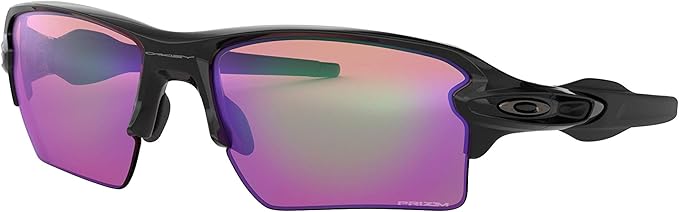
1. Oakley Flak 2.0 XL Prizm Golf — Best Overall
Price: ~$163–$197 | Lens: Prizm Golf (non-polarized) | UV Protection: 100% UV
The Oakley Flak 2.0 XL with Prizm Golf lens has been the benchmark for golf sunglasses for years, and the 2026 version remains the one to beat. Multiple independent reviewers name it the best overall golf sunglasses in 2026, and having worn this frame through countless rounds on courses ranging from links to tree-lined parkland, the reputation holds in every condition.
The Prizm Golf lens technology is the standout feature. Prizm Golf technology tunes the lens to enhance the wavelengths most important for reading course conditions, including turf color differentiation and ball tracking against the sky — delivering a visual experience that genuinely improves how you see the course across all 18 holes. Prizm Golf is specifically tuned to enhance the contrast between green tones, making subtle breaks on the putting surface visible from farther away. The semi-rimless design provides an unobstructed lower field of view — critical for seeing the ball clearly at address without the frame interrupting your sightline.
The frame engineering matches the lens quality. The O Matter frame material is lightweight and flexible without feeling flimsy. Unobtainium earsocks and nose pads grip more firmly as you sweat, keeping the frame in position through the swing and on hilly walks between shots. The XL designation means a larger lens than the standard Flak 2.0, increasing peripheral coverage without making the frame feel oversized.
Pros:
- Prizm Golf lens technology delivers genuinely enhanced course contrast and green reading
- Semi-rimless design provides unobstructed lower field of view at address
- Unobtainium grip system stays secure through sweat and movement
- Lightweight O Matter frame — comfortable for four to five hours of continuous wear
- Named best overall golf sunglasses by multiple independent 2026 reviewers
Cons:
- Non-polarized Prizm Golf lens — not ideal for glare reduction in highly reflective conditions
- $163–$197 is premium pricing for recreational golfers
- The XL profile may feel large for golfers with smaller face shapes
- Prizm Golf’s rose-tinted color shift takes a round or two to get accustomed to
Best for: Golfers who want the most proven, tour-level lens technology for green reading and ball tracking across all light conditions.
2. Tifosi Rivet Enliven Golf — Best Value Golf Sunglasses
Price: ~$65–$80 | Lens: Enliven Golf (non-polarized) | UV Protection: 100% UV
The Tifosi Rivet with Enliven Golf lens is the smartest value purchase in golf sunglasses — delivering performance that punches well above its sub-$80 price tag. Tifosi’s Enliven Golf lens uses a similar color-enhancement philosophy to Oakley’s Prizm Golf, tuning the lens to improve contrast and depth perception on the course without the Oakley price premium.
The Rivet frame is a full-wrap sport design with hydrophilic rubber contact points that grip more securely as conditions warm up and hands get sweaty — the same technology approach as Oakley’s Unobtainium, applied to a more accessible price point. The 20mm longer temple arm keeps the frame stable on a wider range of face shapes, and the vented lens design reduces fogging in humid conditions. For golfers who want a purpose-built golf lens without spending $175+, the Tifosi Rivet is the recommendation that comes with genuine enthusiasm, not just budget-tier apologetics.
Pros:
- Best value golf sunglasses in 2026 — Enliven Golf lens at under $80
- Hydrophilic rubber grip improves with heat and sweat — stays secure all round
- Full-wrap design blocks peripheral light intrusion that distracts during the swing
- Vented lens reduces fogging in humid morning conditions
- Extended temple arm fits a wider range of face widths securely
Cons:
- Enliven Golf lens technology doesn’t match Prizm Golf for peak green-reading contrast
- Non-polarized — the same limitation as the Oakley for highly reflective conditions
- Frame durability under heavy use doesn’t match premium alternatives
- Fewer colorway options than Oakley
Best for: Budget-conscious golfers who want golf-specific lens technology and a secure sport fit without spending over $80 — the best dollar-for-dollar golf sunglasses available.
3. Costa Del Mar Whitetip Pro — Best Premium Polarized Option
Price: ~$199–$249 | Lens: 580G Glass (polarized) | UV Protection: 100% UV
Costa Del Mar built their reputation in saltwater fishing environments where glare management is a matter of safety, not preference. The 580G Glass lens technology — the G standing for glass rather than polycarbonate — produces the sharpest, most scratch-resistant polarized lens available in this price bracket. Glass lenses transmit more light than polycarbonate, which means better optical clarity, truer colors, and less visual distortion than plastic-lens alternatives.
For golf, the 580G lens produces exceptional depth perception on approach shots and significantly reduces the eye strain that comes from four hours squinting at a sun-drenched fairway. The polarized filter eliminates glare from water hazards, cart paths, and morning dew-covered fairways that can briefly obscure ball flight or distract at address. The Whitetip Pro frame is a wraparound sport design with a narrower profile than the Flak 2.0 XL — cleaner-looking under a hat brim and more suitable for golfers who prefer a lighter frame presence. Costa’s COPPERTONE lens tint is specifically optimized for enhancing contrast in outdoor environments.
Pros:
- 580G glass lens delivers superior optical clarity and scratch resistance vs. polycarbonate
- Best polarization performance in this guide — essential for highly reflective conditions
- Exceptional depth perception for judging distances and reading green contours
- Premium frame quality built to last multiple seasons under daily use
- Narrower profile sits cleanly under a hat brim
Cons:
- Glass lenses are heavier than polycarbonate — noticeable on longer rounds
- $199–$249 is the premium tier — harder to justify for infrequent golfers
- Polarization can create dark LCD screen blind spots — GPS watch screens may be harder to read
- Less golf-specific lens color tuning than Prizm Golf or Enliven Golf
Best for: Golfers who play in intensely sunny or highly reflective environments and want the best glare management and optical clarity available at the premium price point.
4. Maui Jim Peahi — Best for All-Day Comfort and Premium Feel
Price: ~$299–$339 | Lens: MauiPure (polarized) | UV Protection: 100% UV
Maui Jim is the premium polarized lens brand that ophthalmologists and serious outdoor athletes consistently recommend, and the Peahi delivers that reputation in a sport-forward design that works beautifully on the golf course. The MauiPure lens material is a proprietary high-performance polycarbonate that combines the lightweight feel of plastic with optical clarity closer to glass — an impressive technical achievement that reduces eye fatigue over long rounds in bright sun.
The PolarizedPlus2 technology doesn’t just block glare — it actively enhances color and contrast after glare elimination, which most polarized lenses don’t attempt. The result is a vivid, natural-looking visual environment rather than the slightly muted look some polarized lenses produce. For reading subtle green breaks, this color fidelity is a meaningful advantage. The Peahi’s wraparound frame is designed for active use with a comfortable, secure fit that doesn’t require adjustment across a full round. The GRILAMID TR-90 frame material is lightweight, hypoallergenic, and extremely durable.
Pros:
- MauiPure lens combines lightweight with near-glass optical quality
- PolarizedPlus2 enhances color after glare removal — more vivid than standard polarization
- Best-in-class all-day comfort for golfers who wear sunglasses for full rounds in bright sun
- GRILAMID frame is lightweight, hypoallergenic, and highly durable
- Maui Jim brand carries strong resale recognition and quality trust
Cons:
- Most expensive option on this list at $299–$339
- Polarized lens has the same LCD screen consideration as the Costa (GPS watch visibility)
- Available lens colors fewer than Oakley’s Prizm lineup
- The premium price requires genuine daily use to justify the investment
Best for: Golfers who play frequently in bright, sunny conditions and want the most comfortable, premium-feeling polarized sunglasses with exceptional optical clarity for the full round.
5. Oakley Radar EV Path Prizm Golf — Best for Maximum Peripheral Coverage
Price: ~$183–$229 | Lens: Prizm Golf (non-polarized) | UV Protection: 100% UV
The Radar EV Path is Oakley’s performance flagship, evolved from the original Radar to feature a taller lens that extends peripheral coverage upward — a design specifically beneficial for tracking ball flight from the tee, where the upward visual field matters most. The larger lens footprint provides more coverage than the Flak 2.0 XL, which some golfers find more visually comfortable in bright, overhead sun conditions.
The Radar EV Path uses the same Prizm Golf lens technology as the Flak 2.0 XL, so the green-reading and contrast enhancement are equivalent. What distinguishes it is the frame design: the XYZ Optics system ensures the lens curvature doesn’t distort peripheral vision as the frame wraps, which is a technical challenge that many high-coverage sport frames fail. The lightweight O Matter frame was flexible yet solid, and the Unobtainium ear socks and nose pads kept the glasses firmly fixed throughout the swing. For golfers who want maximum sun coverage with the Prizm Golf visual advantage, the Radar EV Path is the upgrade from the Flak 2.0 XL.
Pros:
- Extended vertical lens coverage for enhanced upward peripheral tracking
- Same Prizm Golf lens technology as the Flak 2.0 XL — equal green-reading performance
- XYZ Optics system maintains distortion-free peripheral vision through the full wrap
- Unobtainium grip system stays secure through sweat and movement
- Sits cleanly under a hat brim despite the larger lens footprint
Cons:
- More expensive than the Flak 2.0 XL for similar lens technology
- Larger lens profile isn’t for everyone — the frame presence is more noticeable
- Non-polarized — same glare consideration as the standard Prizm Golf
- The wrap design can create minor pressure points for some face shapes over a full round
Best for: Golfers who want maximum peripheral coverage and sun protection alongside Prizm Golf’s green-reading technology — particularly those who track ball flight frequently from the tee.
Buying Guide: What to Look for in Golf Sunglasses
Lens Technology: Golf-Specific vs. Generic
This is the most important distinction in the golf sunglasses market. Generic tinted lenses block light but don’t differentiate between wavelengths — they darken the entire visible spectrum equally. Golf-specific lenses like Prizm Golf and Enliven Golf are engineered to enhance specific wavelengths associated with green-reading, depth perception, and ball contrast against sky and turf, while filtering others.
The practical difference: put on a pair of Prizm Golf lenses on a putting green and you’ll see undulations in the turf that looked flat before. That’s not marketing. It’s color science applied to the specific visual environment of a golf course. For any golfer who reads greens by sight, the upgrade from a generic tinted lens to a golf-specific lens is immediately noticeable.
Polarized vs. Non-Polarized
This is a genuine debate in golf eyewear, and unlike in other outdoor sports, polarized isn’t automatically better for golf.
Polarized lenses eliminate glare from reflective surfaces — cart paths, water hazards, dew-covered fairways — which reduces eye fatigue significantly in intensely sunny conditions. They’re the right choice for golfers who play regularly in bright, coastal, or desert environments where glare is constant.
Non-polarized golf lenses like Prizm Golf preserve the depth perception cues that polarized filters can slightly suppress. Many golfers, particularly those reading greens and judging distance to hazards, prefer the non-polarized visual experience for its more natural depth rendering. The practical recommendation: if you play in bright conditions regularly, polarized is worth it for fatigue reduction alone. If you play mostly in overcast or variable conditions, non-polarized golf-specific tints like Prizm Golf or Enliven Golf give you better contrast enhancement.
Frame Fit and Stability Through the Swing
A golf sunglasses frame that shifts position during your swing creates visual inconsistency at exactly the wrong moment. The key features to look for: wrap-around or semi-wrap-around frame geometry that holds the lens close to the face, hydrophilic rubber or Unobtainium contact points that grip more firmly as you sweat, and an extended temple arm length that distributes the frame weight comfortably across a wider range of head shapes.
Semi-rimless designs (like the Flak 2.0 XL) also eliminate the lower frame edge from your peripheral vision at address — a practical advantage for players who find the bottom rim distracting when they look down at the ball.
UV Protection: The Non-Negotiable Minimum
Every golf sunglasses recommendation in this guide provides 100% UV400 protection, which blocks UV wavelengths up to 400 nanometers — the standard for complete UV protection. This isn’t a differentiating feature at the premium level; it’s the minimum baseline any pair of golf sunglasses should meet. Playing in sunglasses without full UV protection causes cumulative eye damage over time and is more dangerous than playing without sunglasses at all, because the dilated pupils behind a dark lens absorb more UV than unprotected eyes in bright light.
Check before buying: look for “UV400” or “100% UV protection” on any pair of golf sunglasses, regardless of price point. Budget sunglasses that claim to block 99% of UV are below the standard — 100% UV400 is the correct specification.
Final Verdict
For most golfers, the Oakley Flak 2.0 XL with Prizm Golf is the right choice — the best combination of lens performance, fit, durability, and brand trust. The Prizm Golf lens technology is the most proven in the golf sunglasses market and the green-reading advantage is real and repeatable across different lighting conditions.
For golfers on a budget, the Tifosi Rivet with Enliven Golf delivers remarkable value at under $80 — purpose-built golf lens technology in a secure sport frame at a price that makes the decision easy.
For premium polarized performance in intense sun, the Costa Del Mar Whitetip Pro and Maui Jim Peahi are both excellent depending on whether you prioritize optical clarity (Costa’s 580G glass) or all-day comfort with color enhancement (Maui Jim’s PolarizedPlus2). And for maximum peripheral coverage with Prizm Golf performance, the Oakley Radar EV Path takes the Flak 2.0 XL formula and expands it.
A good pair of golf sunglasses is one of the cheapest performance upgrades you can make. Unlike a new driver, they work on every single shot — from the first tee to the 18th putt.
Low Handicap Golf may earn a commission through affiliate links on this page at no additional cost to you. All product recommendations are based on independent research and real-world testing.
 Low Handicap Golf
Leave a comment