
By Low Handicap Golf | Updated May 2026
The golf glove is the most replaced piece of equipment in any serious golfer’s bag — and also the most under-thought. Most golfers grab whatever’s on the rack at the pro shop, wear it until it’s cracked and crusted from dried sweat, then grab another one the same way. The idea that different conditions demand different gloves — and that the right glove makes a material difference to grip and feel — barely enters the conversation.
It should. The hands are the only point of contact between you and the golf club. Grip pressure, club face awareness, and tactile feedback through impact all flow through the glove. A leather glove in a downpour turns slick after three holes and becomes more liability than asset. A rain glove worn on a dry summer afternoon feels thick and numbs the feedback you’ve been working to develop. Cold-weather gloves that restrict hand movement kill the release you’ve been grooving on the range all winter.
The good news is that a complete glove setup — one for dry conditions, one for rain, one for cold — costs less than most golfers spend on a dozen balls. This guide covers the five best golf gloves across every weather condition in 2026, followed by a buying guide that explains what actually separates a good glove from a great one.
Our Top 5 Golf Gloves for Every Weather Condition
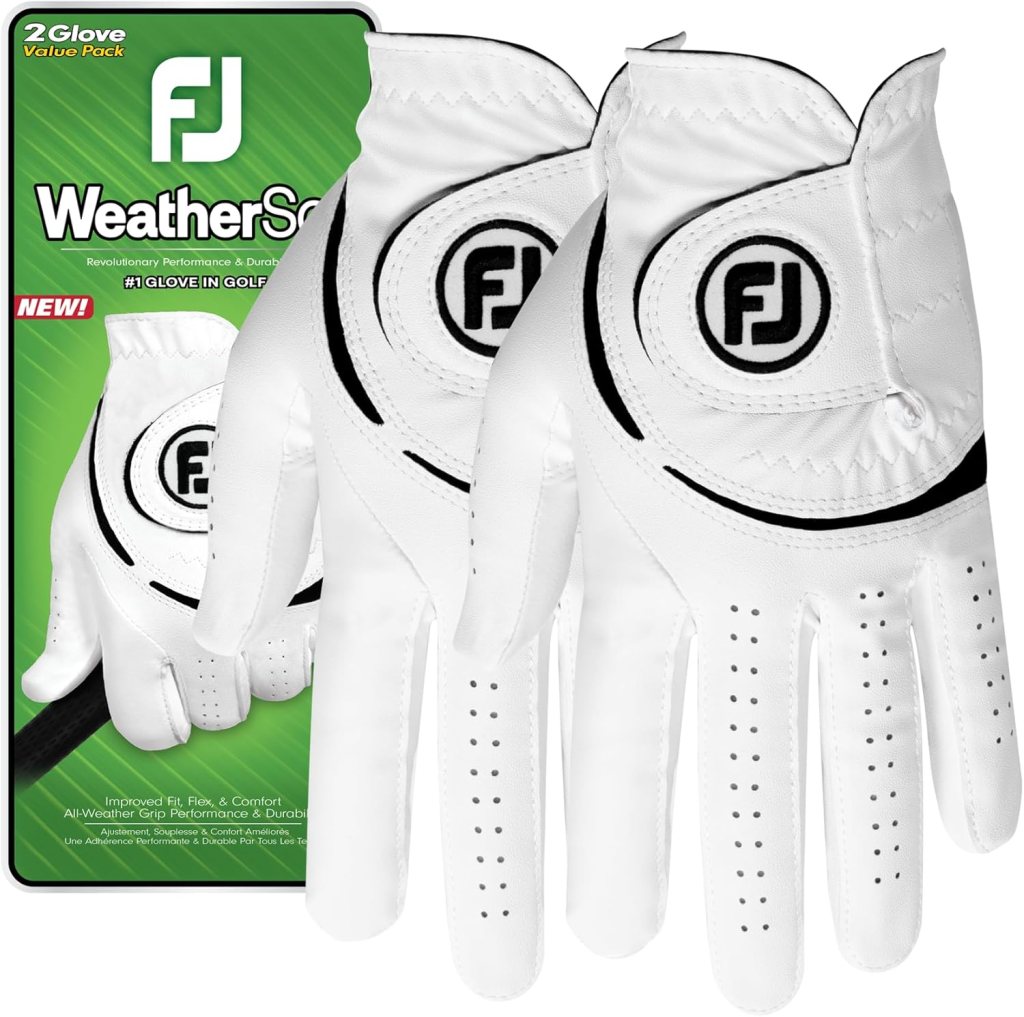
1. FootJoy StaSof — Best Overall Dry-Weather Glove
Price: ~$22–$29 | Material: Premium Cabretta leather | Condition: Dry
FootJoy has been making the StaSof since 1980, and it remains the most consistently excellent golf glove across every metric that matters for a recreational golfer playing under normal conditions. It is the choice of tour players including Jon Rahm and Xander Schauffele — not because of a sponsorship, but because it genuinely performs at a level that serious golfers notice.
The Advanced Performance leather construction delivers a barely-there feel that makes it easy to forget you’re wearing a glove at all, which is exactly what you want. The natural tackiness of premium cabretta leather provides a secure grip without feeling sticky or forced. Breathing holes on the front and back of the fingers keep the hand cool on warm days, and the PowerNet mesh across the knuckles adds stretch and flexibility through the swing. The angled velcro closure fits a wide range of wrist shapes without bunching or gapping.
Where the StaSof earns its reputation is in its consistency — round after round, it holds its shape and feel better than most premium leather gloves, which start to harden and lose their shape after a few exposures to sweat and humidity. If you want the single best golf glove for feel and tour-level performance, buy the FootJoy StaSof. No further caveat needed.
Pros:
- Best-in-class feel and grip among cabretta leather gloves — tour-proven across decades
- Natural leather tackiness provides a secure grip without feeling artificial
- PowerNet mesh knuckle design adds flexibility and ventilation
- Durability that outlasts most premium leather competitors
- The benchmark glove most other models are compared against
Cons:
- Cabretta leather performs poorly when wet — needs to be removed in rain
- More expensive per glove than synthetic alternatives
- Will eventually harden if allowed to dry crumpled — requires flat drying
- Not suitable for cold weather use
Best for: Dry-weather rounds where feel and grip quality are the top priority — the glove for your best playing conditions.
2. Callaway Tour Authentic — Best Premium Leather Alternative
Price: ~$25–$29 | Material: AAA Cabretta leather | Condition: Dry/Warm
The Callaway Tour Authentic is the premium glove that gets ignored because golfers default to the familiar FootJoy or Titleist answer. It is an excellent premium Cabretta leather glove and the most durable tested at this price — retaining its fit and feel through heavy use in a way that impresses even players who’ve been loyal to FootJoy for years.
The AAA cabretta construction combined with Griptac 2.0 gives it a stronger grip story than many feel-first premium gloves. Where some leather gloves prioritize tactile feedback at the expense of grip security, the Tour Authentic balances both convincingly. The Opti Dry cuff is specifically engineered for hot-weather performance — wicking moisture away from the wrist and preventing the soggy cuff that makes summer rounds uncomfortable. The Opti Fit closure offers meaningful wrist adjustability for golfers who find standard velcro tabs too loose or too restrictive.
The honest caveat is that it doesn’t quite match the StaSof in raw feel — nothing in the leather glove market quite does. But it is the most durable premium leather option tested extensively in 2026, and for golfers who go through gloves quickly in hot conditions, the durability advantage is real and worth the marginal feel trade-off.
Pros:
- Most durable premium cabretta leather glove tested — outlasts most competitors under heavy use
- Griptac 2.0 provides stronger grip than many feel-first leather alternatives
- Opti Dry cuff is specifically engineered for warm, humid conditions
- Opti Fit closure provides better wrist adjustability than standard velcro tabs
- Competitive price for AAA cabretta construction
Cons:
- Doesn’t match the StaSof’s peak tactile softness — feel is very good but not the best
- Runs slightly snug out of the box — needs a break-in period to reach optimal fit
- Not designed for wet or cold conditions
- Less brand recognition in the glove market than FootJoy
Best for: Golfers who want a durable premium leather glove for hot-weather rounds and want the best grip-to-feel balance in the cabretta category.
3. FootJoy RainGrip — Best Wet-Weather Glove
Price: ~$19–$28/pair | Material: Synthetic/autosuede knit | Condition: Wet/Rain
If you play in bad weather, the FootJoy RainGrip is the number one glove you need — full stop. The synthetic grip material is genuinely unique: it gets better as it gets wet, not worse, and the confidence that gives you when conditions turn nasty is hard to overstate. This isn’t marketing language — it’s physics. The autosuede knit palm literally generates more friction as moisture accumulates, which is the opposite of what leather does and the opposite of what your hands need you to worry about in the middle of a rain shower.
FootJoy has also sharpened the latest version — it’s thinner with a nicer feel, and a redesigned, stretchier back means it stays light rather than going soggy and heavy when soaked. It’s sold as a pair because wet-weather golf demands both hands protected, and the consistent grip across both gloves eliminates the variable feel that comes from mismatched glove and bare hand.
There’s a detail most golfers miss: the RainGrip also works brilliantly for golfers with sweaty hands in dry conditions. If you suffer from sweaty hands — the kind that turn a leather glove hard and crusty after a few holes — wear a RainGrip full time and the problem disappears. For golfers in hot, humid climates who struggle to keep leather grips fresh, the RainGrip is a practical solution that works in every weather direction.
Pros:
- Grip genuinely improves when wet — no other glove in the market does this as well
- Sold as a pair — consistent grip on both hands in rain
- Thinner, lighter updated construction stays mobile and doesn’t become soggy
- Also excellent for golfers with sweaty hands in dry conditions
- Quick-drying properties so it’s usable again within holes
Cons:
- Not the right glove for dry conditions — feel trails leather alternatives significantly
- The snug fit (deliberate — material expands when wet) can feel tight on first use
- Will wear faster than leather in dry use
- Grip improvement in wet is a specialist trade-off — not an all-day everyday glove
Best for: Any golfer who plays through rain, lives in a wet climate, or battles sweaty hands in warm weather — the most practically useful specialist glove on this list.
4. Titleist Players Flex — Best Feel for Narrow Hands
Price: ~$22–$28 | Material: Premium Cabretta leather | Condition: Dry
The Titleist Players Flex is the dry-weather alternative for golfers who find the StaSof slightly too wide in the palm. The Players Flex uses a premium cabretta leather construction with a deliberately narrower hand profile than FootJoy and Callaway, making it a genuinely better fit for golfers with longer, narrower hands who have been living with standard-profile gloves that gap or bunch along the palm edge.
The extended closure accommodates a wider range of wrist circumferences — useful for golfers with larger wrists who find standard glove closures difficult to secure properly. The leather quality is comparable to the StaSof, and multiple testers placed it alongside FootJoy and Ping as the three gloves closest to what you’d see in a tour bag. MyGolfSpy testers praised the comfort, grip, and feel with minimal gripes about overall fit.
The practical recommendation is to try both the StaSof and the Players Flex if possible — the right choice is almost entirely determined by hand shape, and a properly fitting Titleist will outperform a slightly-too-wide FootJoy every time. Fit is the primary variable in glove performance, and Titleist’s narrower profile serves a specific hand type better than any other premium leather glove.
Pros:
- Narrower last fits longer, narrower hands better than FootJoy and Callaway profiles
- Premium cabretta construction delivers tour-level feel and grip
- Extended closure accommodates a wider range of wrist circumferences
- Named alongside the StaSof and Ping Tour as the three closest to tour-quality
- Trusted Titleist brand with strong resale and retail presence
Cons:
- Standard cabretta leather — performs poorly when wet, requires removal in rain
- More expensive per glove than entry-level alternatives
- The narrower fit is a specific advantage only — golfers with wider hands may prefer FootJoy
- Less widespread retail availability than FootJoy
Best for: Golfers with longer, narrower hands who have never quite found a perfect-fitting leather glove — the Titleist fit profile is the answer.
5. FootJoy WinterSof — Best Cold-Weather Glove
Price: ~$28/pair | Material: Synthetic/autosuede + foam fleece | Condition: Cold/Winter
Winter golf demands a completely different set of priorities from a glove. Feel takes a step back. Warmth, grip retention in cold and potentially wet conditions, and range of motion through a restricted swing take over. The FootJoy WinterSof delivers the best balance of these properties of any cold-weather golf glove currently available.
The waterproof structured nylon construction and weather shield foam fleece on the back of the glove keeps hands warm and dry in genuinely cold conditions — the kind of November morning round where hands stiffen within the first three holes on the range. The advanced autosuede knit palm is the same material used in the RainGrip, which means grip actually improves when wet — a meaningful feature for winter rounds where dew, frost, and intermittent rain are all part of the experience. The extended knit cuff adds both warmth and comfort without restricting wrist movement through the swing.
The WinterSof is sold as a pair — correctly, since cold weather affects both hands equally and mismatched protection creates uneven grip pressure. For dedicated winter golfers who refuse to hang the clubs up until spring, these are the gloves that make the season survivable.
Pros:
- Weather shield foam fleece provides genuine warmth in cold conditions
- Autosuede knit palm improves grip when wet — ideal for frost and morning dew
- Waterproof nylon construction handles mixed cold/wet winter conditions
- Extended knit cuff adds warmth without restricting swing movement
- Sold as a pair — consistent protection on both hands
Cons:
- Feel is noticeably reduced compared to leather dry-weather gloves — warmth demands compromise
- Only available in black — limited color choice for aesthetically minded golfers
- More expensive per pair than single fair-weather gloves
- Not suitable for warm or dry conditions — a specialist winter purchase
Best for: Golfers who play through winter in cold, wet, or mixed conditions and need genuine warmth without sacrificing the grip quality that keeps rounds playable.
Buying Guide: What to Look for in a Golf Glove
Leather vs. Synthetic: Understanding the Core Trade-Off
Leather is still the gold standard for feel and grip: nothing else quite replicates that tactile, barely-there sensation on the club. The trade-off is that it degrades faster with heavy use, doesn’t perform well in the wet, and can feel warm on hot days. Synthetic and hybrid gloves are more durable, often cheaper, and cope much better with weather and sweat.
The practical framework: use leather for dry conditions when feel matters most, synthetic for wet and cold conditions where durability and grip retention matter more. The sweet spot for the serious golfer is carrying both — a leather for normal rounds and a rain glove or cold glove in the bag for when conditions change mid-round.
Fit: The Variable That Matters Most
A glove that doesn’t fit correctly will never perform correctly, regardless of how premium the material is. The ideal fit is snug across the palm with no bunching, no gapping, and a flat surface across the back of the hand. Excess material across the palm creates wrinkles that shift under grip pressure and reduce feel. Too tight a fit restricts finger flexion and makes the hand tense at address.
To check fit: close your hand into a fist. The glove should feel secure with no excess material bunching at the knuckles. Open your hand fully — the glove should stretch comfortably without feeling restrictive. Check the closure: the tab should close flat without pulling the glove too tight or leaving visible gaps.
Most brands offer Cadet sizing — a wider, shorter profile for golfers with wide palms and shorter fingers. If standard gloves always feel slightly too long in the fingers, Cadet sizing resolves the fit immediately.
When to Replace Your Glove
Most golfers hold onto gloves significantly longer than they should. A leather glove that has developed hardened patches, torn thumb stitching, or visible wear through the palm is past its useful life — it’s actively costing you feel and grip rather than providing them.
A practical guide: replace leather gloves every 15–20 rounds under normal conditions, or as soon as the palm starts to stiffen. Synthetic and all-weather gloves last longer — typically 25–35 rounds — but should be replaced when grip texture smooths out or the palm starts to slip on the handle under any conditions.
For high-volume golfers or those who play in hot, humid climates, rotating two or three gloves per round — allowing each to dry between shots — extends life significantly and maintains grip quality throughout.
Care: The Five Minutes That Double Glove Life
Leather gloves should never be left crumpled in a bag or pocket. After each round, remove the glove, flatten it over the back of your hand or against a flat surface, and allow it to air dry naturally. Never accelerate drying with heat — a car dashboard in summer will crack cabretta leather permanently after a single exposure. Spot-clean with a damp cloth only; machine washing destroys the material.
Synthetic gloves tolerate gentler hand washing with mild soap, but should also be laid flat to dry rather than hung, which can distort their shape.
Final Verdict
For dry-weather performance, the FootJoy StaSof is the benchmark — the most consistently excellent leather glove available and the choice you make with confidence. For a durable premium alternative with better hot-weather cuff engineering, the Callaway Tour Authentic competes closely. For golfers with narrow hands, the Titleist Players Flex fits better than anything else in the category.
When it rains, the FootJoy RainGrip is the only honest recommendation — its grip-improving-when-wet technology solves a real problem in a way nothing else matches. And for winter rounds when warmth becomes the priority, the FootJoy WinterSof keeps your hands functional and your grip consistent through conditions that would end most rounds early.
The complete setup — one leather, one rain, one winter — costs less than $80 and covers every weather scenario the season throws at you. It’s the best return on investment available in the golf equipment market.
Low Handicap Golf may earn a commission through affiliate links on this page at no additional cost to you. All product recommendations are based on independent research and real-world testing.
 Low Handicap Golf
Leave a comment