
Disclosure: As an Amazon Associate, Low Handicap Golf earns from qualifying purchases. Product availability can change.
PING’s 2026 iron lineup stretches from the forgiving G440 to the compact Blueprint T, with three meaningful stops between them. That breadth is useful, but it also makes shopping by handicap alone a mistake. The right PING iron depends on where you strike the face, the height and spin you create, and how much visual help you want behind the ball.
The active range now includes the G440, i240, new i540, Blueprint S and Blueprint T. PING lists the older G430 and i530 as fill-in or replacement models, so this comparison focuses on the current heads a new fitting should begin with.
PING irons compared
| Model | Category | Best fit | Forgiveness |
|---|---|---|---|
| G440 | Game improvement | Easy launch and reliable distance | Highest |
| i540 | Players distance | Speed in a cleaner profile | High |
| i240 | Players cavity | Control with practical help | Mid-high |
| Blueprint S | Forged players cavity | Better-player feel and stability | Moderate |
| Blueprint T | Forged blade | Elite strike control | Lowest |
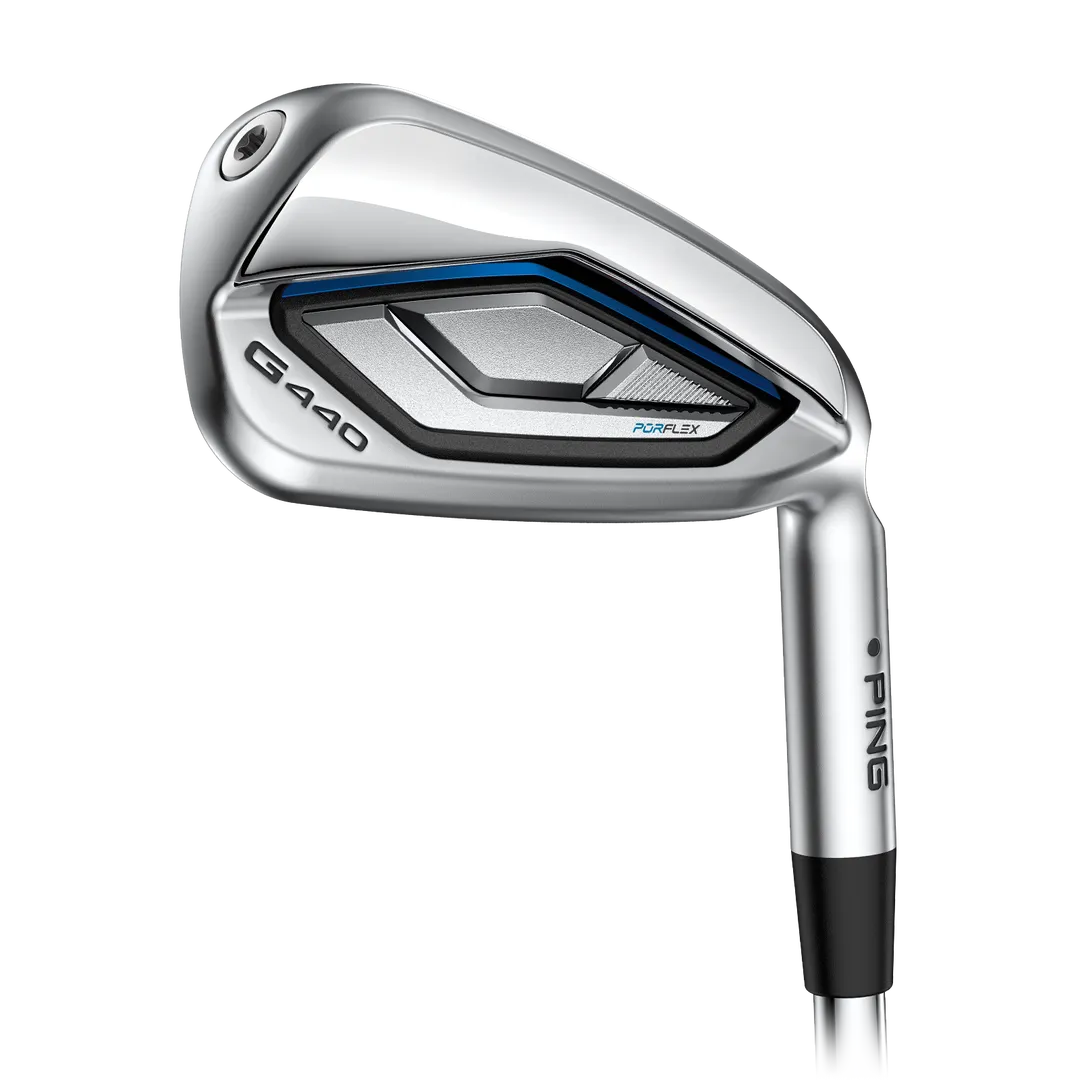
1. PING G440: best for forgiveness
G440 is the place to start when consistent carry matters more than a compact topline. Its wider sole, perimeter weighting and friendly launch are designed to reduce the penalty for ordinary contact. It suits mid- and higher-handicap golfers, but also anyone with moderate speed who needs the iron to contribute more height.
- Pros: easiest launch, stable on misses, confidence-inspiring shape and broad fitting range.
- Cons: larger profile and more offset; fast players must check spin and distance gaps.
Check current PING G440 availability on Amazon.
2. PING i540: best players-distance option
The i540 targets the golfer who wants ball speed and stopping power without a full game-improvement footprint. It is a natural comparison for compact hollow-body irons: cleaner behind the ball than G440, faster and more forgiving than a traditional forged cavity.
Test it with your gamer ball and pay attention to peak height. The useful i540 fit is not simply the longest one; it is the setup that preserves enough launch and spin to hold firm greens.
- Pros: speed, compact appearance, useful long-iron help and broad appeal.
- Cons: less feedback than the Blueprint models and potential gapping issues for high-speed players.
3. PING i240: best overall blend
i240 sits in the most practical part of the range. It offers a players-style shape and controllable flight while retaining more stability than a true blade. Golfers who dislike bulky irons but know they benefit from perimeter weighting should give it serious attention.
- Pros: balanced control and forgiveness, clean profile, excellent mixed-set platform.
- Cons: not as fast as i540 or as forgiving as G440; demands reasonably consistent contact.
4. PING Blueprint S: best forged players cavity
Blueprint S is made for accomplished golfers who prioritize feel, turf interaction and predictable distance. Compared with Blueprint T, the cavity construction supplies a little more stability and makes it the more realistic full-set option for many low handicaps.
- Pros: refined feel, compact look, workability and more help than the T.
- Cons: expensive, demanding relative to i240 and unnecessary if your main goal is speed.
5. PING Blueprint T: best for elite ball-strikers
Blueprint T is the precision tool. The small forged blade rewards centered contact and gives skilled players maximum control over flight and curvature. It can also be used selectively in short irons rather than forcing it through the entire set.
- Pros: exceptional feedback, minimal offset and complete shot-shaping freedom.
- Cons: least protection on misses, intimidating long irons and a narrow fitting audience.
Understanding PING color codes
PING’s color-code system identifies lie-angle configurations relative to the company’s standard. Lie angle changes how the sole and face arrive at impact. If the club is too upright for your delivery, starts can trend left for a right-handed player; too flat can encourage the opposite pattern. Wrist-to-floor measurements and height provide a starting point, not a final prescription.
A fitter should confirm the result dynamically using strike location, launch direction and turf interaction. Do not copy a friend’s color code or assume an old PING fitting automatically transfers to a new model. Length, posture, swing changes and head design all influence the answer.
How to choose
Start with G440 if launch and mishit protection are the priorities. Begin with i540 if you want speed in a more compact package. Choose i240 when dispersion and control matter more than maximum distance. Blueprint S fits the skilled player who wants forged feel with modest insurance, while Blueprint T belongs with golfers whose strike consistency justifies a blade.
Mixed sets are especially logical here: i540 long irons can add carry above i240 scoring clubs, while Blueprint S long and middle irons can transition into Blueprint T short irons. Verify loft gaps rather than joining models at a predetermined club. For more context, see our high-end irons and blade guide.
Final verdict
G440 is the forgiveness winner, i540 is the distance choice and i240 is the best all-around fit for a golfer who values both help and control. Blueprint S is the smarter forged option for most better players; Blueprint T is the specialist’s blade. Whatever the model, a correct PING color code and sensible shaft pairing are part of the purchase—not optional extras.
PING iron fitting questions
Is G440 only for high handicaps?
No. It is built around forgiveness, but handicap does not describe iron speed or contact. A good scorer with moderate speed may benefit from G440 launch, while a higher handicap with strong iron contact may prefer i540 or i240. The deciding evidence is carry dispersion and landing angle.
Should I choose i240 or i540?
Choose i540 when extra ball speed and long-iron carry are central to the fitting. Choose i240 when predictable distance, feedback and trajectory control matter more. Test both from imperfect lies; a head that wins from a perfect mat may not be the one that performs from rough or a slight downhill lie.
Blueprint S or Blueprint T?
Blueprint S is the safer full-set choice because its cavity offers more stability. Blueprint T makes sense for extremely reliable strikers or as a short-iron component in a blended set. Compare your worst five strikes, not just your best three. Good shots can make every head look suitable.
How important is the shaft?
Very. Weight and profile affect delivery, contact and fatigue. A shaft should help you return the head consistently without forcing a tempo. “Stiff” is not a universal measurement across manufacturers, so fit by actual performance rather than the letter on the label.
What numbers should I compare?
Use carry distance rather than total roll, then compare left-right dispersion, front-back dispersion, peak height and descent angle. Also note strike location and how the sole moves through the ground. A longer average can hide a wider pattern that costs more shots on the course.
Three useful PING set-building scenarios
The improving mid-handicap: Begin with G440 and i540. If G440 is clearly tighter through the middle of the set but looks large in the scoring clubs, blend i540 only after verifying lofts and carry. The goal is not visual symmetry; it is reliable coverage from the longest iron through the first wedge.
The single-digit player losing long-iron height: Keep i240 or Blueprint S where control remains excellent, then test i540 in the longest one or two irons. A faster head can replace a hybrid for golfers who prefer an iron shape, but only when peak height and stopping power improve.
The accomplished shot-maker: Compare Blueprint S and T in short irons from fairway, rough and partial distances. T may win on feel, while S wins the scorecard by narrowing misses. A combo set can preserve blade feedback in scoring clubs without making a 4-iron unnecessarily difficult.
Finally, insist on testing your preferred grip size and a realistic set length. PING’s fitting system is strongest when length, lie, shaft, grip and head are treated as one system. Changing any one can influence posture and impact enough to alter the others.
Leave a Reply