
Disclosure: As an Amazon Associate, Low Handicap Golf earns from qualifying purchases. Product availability can change.
A premium golf rangefinder should do more than produce the same flag number in a nicer case. The worthwhile upgrades in 2026 are faster target acquisition, clearer optics, dependable slope calculation, stabilization, better weather resistance and—at the top end—GPS context that a laser alone cannot provide.
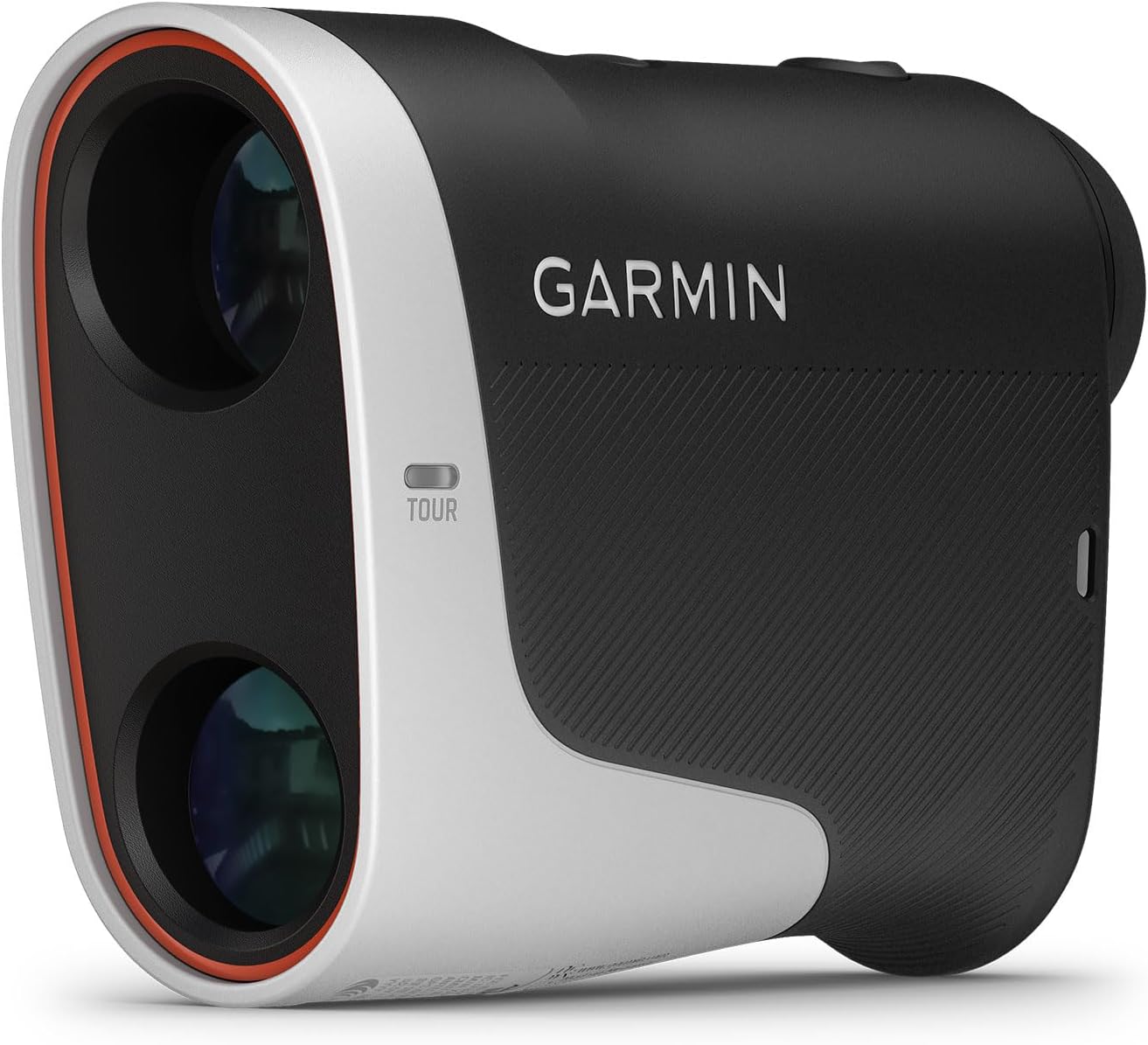
These five models cover distinct reasons to spend more: Bushnell’s Pro X3+ Link and Tour V7 Shift, Nikon’s COOLSHOT PROIII STABILIZED, Garmin’s compact Approach Z30 and the map-equipped Approach Z82. None is automatically right for every golfer.
Premium rangefinders compared
| Model | Best for | Standout feature |
|---|---|---|
| Bushnell Pro X3+ Link | Premium laser performance | Environmental and connected PlaysAs data |
| Bushnell Tour V7 Shift | Best overall balance | Dual-color OLED and Slope First |
| Nikon PROIII STABILIZED | Unsteady hands | Optical stabilization |
| Garmin Approach Z30 | Garmin watch users | Range Relay integration |
| Garmin Approach Z82 | Maximum technology | Laser plus full-color GPS mapping |
1. Bushnell Pro X3+ Link: best premium laser
Pro X3+ Link is designed for golfers who want a laser reading adjusted by more than elevation. Its premium appeal centers on strong optics, fast flag acquisition, a magnetic cart mount and connected PlaysAs recommendations that can incorporate environmental and personal club information when used with compatible systems.
- Pros: excellent optics, robust construction, refined slope tools and powerful ecosystem features.
- Cons: expensive, relatively substantial in hand and some connected benefits require additional compatible hardware or apps.
Check current Pro X3+ Link availability on Amazon.
2. Bushnell Tour V7 Shift: best overall
Tour V7 Shift strips the proposition back to what most golfers need: a quick, clear laser with slope that can be visibly disabled for competition. Its dual-color OLED display improves contrast, Visual Jolt confirms flag lock, and the BITE magnet makes cart use straightforward. Bushnell specifies 6x magnification, IPX6 weather protection and accuracy within one yard.
- Pros: excellent display, fast lock confirmation, practical magnet and tournament-ready slope switch.
- Cons: premium price without GPS maps and more capability than occasional golfers require.
Check current Tour V7 Shift availability on Amazon.
3. Nikon COOLSHOT PROIII STABILIZED: best stabilized rangefinder
Nikon’s defining feature is stabilization. It reduces visible shake in the viewfinder and helps steady the outgoing laser, making a small flag easier to acquire when hands are unsteady, the wind is up or fatigue sets in. That is a functional advantage, not a spec-sheet luxury.
- Pros: genuinely useful stabilization, strong Nikon optics, compact format and slope capability.
- Cons: costs more than conventional lasers and lacks the GPS context of Garmin’s hybrids.
Check current Nikon PROIII availability on Amazon.
4. Garmin Approach Z30: best for Garmin watch users
Z30 makes the strongest case inside Garmin’s ecosystem. Range Relay can send a ranged flag distance to a compatible Garmin device, where the number can be understood alongside the hole map. That bridges the laser’s exact target measurement and the watch’s strategic context without turning the rangefinder itself into a large hybrid.
- Pros: compact, strong Garmin integration, slope-adjusted distance and good value within the premium tier.
- Cons: much of its differentiation depends on owning a compatible Garmin device.
Check current Approach Z30 availability on Amazon.
5. Garmin Approach Z82: best technology
Z82 overlays laser ranging with full-color GPS mapping, giving golfers the flag plus hazards, green shape and layup context. It is particularly useful on unfamiliar courses where a perfect flag number does not reveal the safe side or the trouble beyond the target.
- Pros: combines precise laser distance and GPS maps, rich hazard context and strong course-management value.
- Cons: expensive, bulkier and more complex than a standard laser; rechargeable electronics demand planning.
Check current Approach Z82 availability on Amazon.
What does premium money buy?
Optics and acquisition: clearer glass and brighter displays reduce the time spent wondering whether the laser caught the pin or the trees behind it. Stabilization: valuable for any golfer who struggles to hold a small target. Weather protection: a rangefinder carried every round should tolerate rain and cart use. Ecosystem features: Garmin mapping and Bushnell’s connected tools can improve decisions, but only if you will maintain the apps and compatible devices.
Slope and tournament legality
Slope-adjusted distance is excellent for practice and casual play because it translates elevation into a “plays like” number. Under the Rules of Golf, a local rule can permit distance-measuring devices, but using elevation-adjusted distance during competition is generally not allowed. Choose a model with a clear, externally visible way to disable slope and confirm the event’s local rules before teeing off.
Buying advice
Tour V7 Shift is the best all-around choice for a golfer who wants premium laser fundamentals. Choose Pro X3+ Link for Bushnell’s fullest feature set, Nikon PROIII for stabilization, Z30 for a compatible Garmin watch, and Z82 when maps are worth the added cost and complexity. Budget shoppers should read our rangefinder guide for beginners before assuming premium is necessary.
Final verdict
Spend more when the upgrade solves a real on-course problem: poor target lock, hard-to-read optics, shaky hands or missing hazard context. If a basic laser already gives fast, trustworthy numbers, premium features may not lower scores. If it slows play or creates doubt, one of these five can be a meaningful upgrade.
Premium rangefinder questions
How much accuracy do golfers need?
A trustworthy reading within about a yard is already more precise than most players’ shot patterns. Premium performance is often about acquiring the correct target quickly and repeatedly, not shaving a theoretical fraction from the measurement. Flag-lock feedback is valuable because a perfectly measured tree is still the wrong number.
Is stabilization worth paying for?
It can be the most useful premium feature if the reticle dances around the flag. Stabilization helps older golfers, players with tremor and anyone ranging from an awkward stance. If you already lock targets instantly, spend the money on optics, mapping or keep it in your pocket.
Laser or GPS hybrid?
A conventional laser answers “how far is that object?” A hybrid also answers “what else is around it?” Z82 earns its premium on blind approaches, unfamiliar holes and situations where trouble behind the green matters. On a familiar home course, the extra interface may add little.
Should I choose replaceable or rechargeable power?
Replaceable batteries are easy to keep in the bag and can last many rounds. Rechargeable models reduce disposable-battery use but require a charging habit. Neither is universally better. Traveling golfers should consider cable availability and whether a dead device can be revived five minutes before a tee time.
What about build quality?
Golf electronics live around rain, sand, cart paths and crowded bag pockets. Check the stated water resistance, warranty, case quality and magnet strength. Attach a magnetic unit only to a stable cart surface and put it back in the case before returning the cart—many expensive rangefinders are lost, not broken.
How to test a rangefinder
Range the same flag several times and watch for consistency. Try a target with trees directly behind it, then test in bright sun and lower light. Confirm the display is readable with your normal glasses. Finally, operate the slope switch and mode controls without looking at the manual. A device that is impressive at a desk but awkward during a 20-second pre-shot routine is not a good fit.
Who should buy each model?
The competitive golfer who prizes familiar laser operation should start with Tour V7 Shift. The equipment enthusiast already using compatible Foresight or Bushnell tools can extract more value from Pro X3+ Link. A golfer whose hands make target lock frustrating should prioritize Nikon’s stabilization over extra software.
Approach Z30 makes the most sense for someone already wearing a compatible Garmin watch and wanting exact flag distance inside that system. Z82 is for the frequent traveler, course collector or strategy-focused player who will consult the map rather than treating it as decoration. Those distinctions are more meaningful than ranking the five by price.
Before buying, check dimensions and weight against your hand and preferred case position. Golfers who walk may care more about a compact unit; cart golfers may prioritize a secure integrated magnet. Left-handed players should also confirm that buttons and slope controls remain comfortable in their normal grip.
Leave a Reply